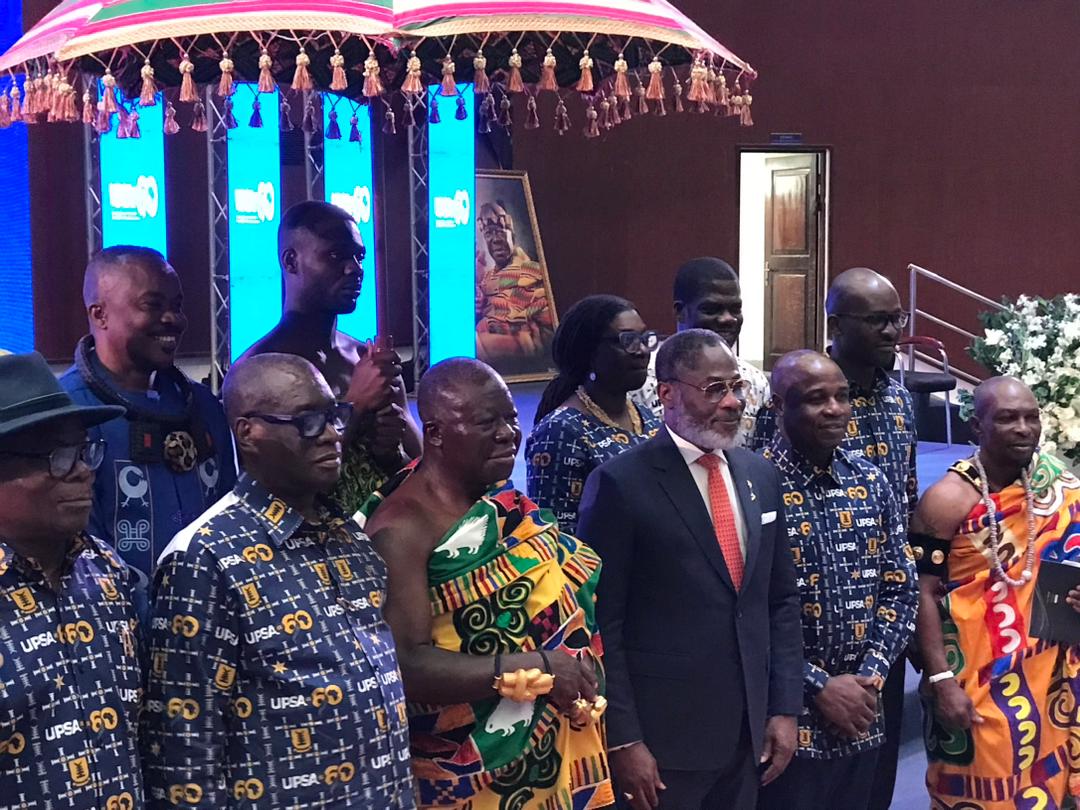
Otumfuo Calls for Integrity and Ethical Leadership at Ghana Business Leaders Conclave
The Asantehene, Otumfuo Osei Tutu II, has urged Ghanaian business leaders to uphold integrity, fairness, and ethical leadership in their businesses and institutions.
Speaking at the Ghana Business Leaders Conclave held at the University of Professional Studies, Accra (UPSA) on Friday, May 15, the Asantehene said true and lasting success can only be achieved through honesty, discipline, and respect for others.
Addressing business executives, entrepreneurs, policymakers, and academics at the event, Otumfuo Osei Tutu II shared lessons from his leadership experience in the Asante Kingdom.
He explained that after ascending to the Golden Stool, he worked to resolve disputes that threatened the unity of Asanteman by relying on moral values, patience, dialogue, and fairness.
According to him, the same principles later helped in resolving other national conflicts across Ghana.
“The lesson is simple,” the Asantehene stated. “Every conflict has a solution. Every dispute created by people can be resolved if there is fairness, patience, truth, and respect.”
He noted that these values are not only important in traditional leadership but are also necessary in business operations and national development.
Otumfuo said businesses need ethical leadership to manage shareholder disagreements, labour issues, contract negotiations, and workplace relations successfully.
He warned that negotiation and mediation should not only be seen as technical skills but as moral responsibilities that require honesty and integrity.
“A negotiator without integrity manipulates people, and a leader without ethics may enjoy temporary success but cannot build a lasting institution,” he said.
The Asantehene also cautioned leaders against selfish and dishonest practices, stressing that trust and fairness are essential for building strong institutions and peaceful societies.
The Ghana Business Leaders Conclave brought together leaders from different sectors to discuss leadership, governance, and Ghana’s economic development.


